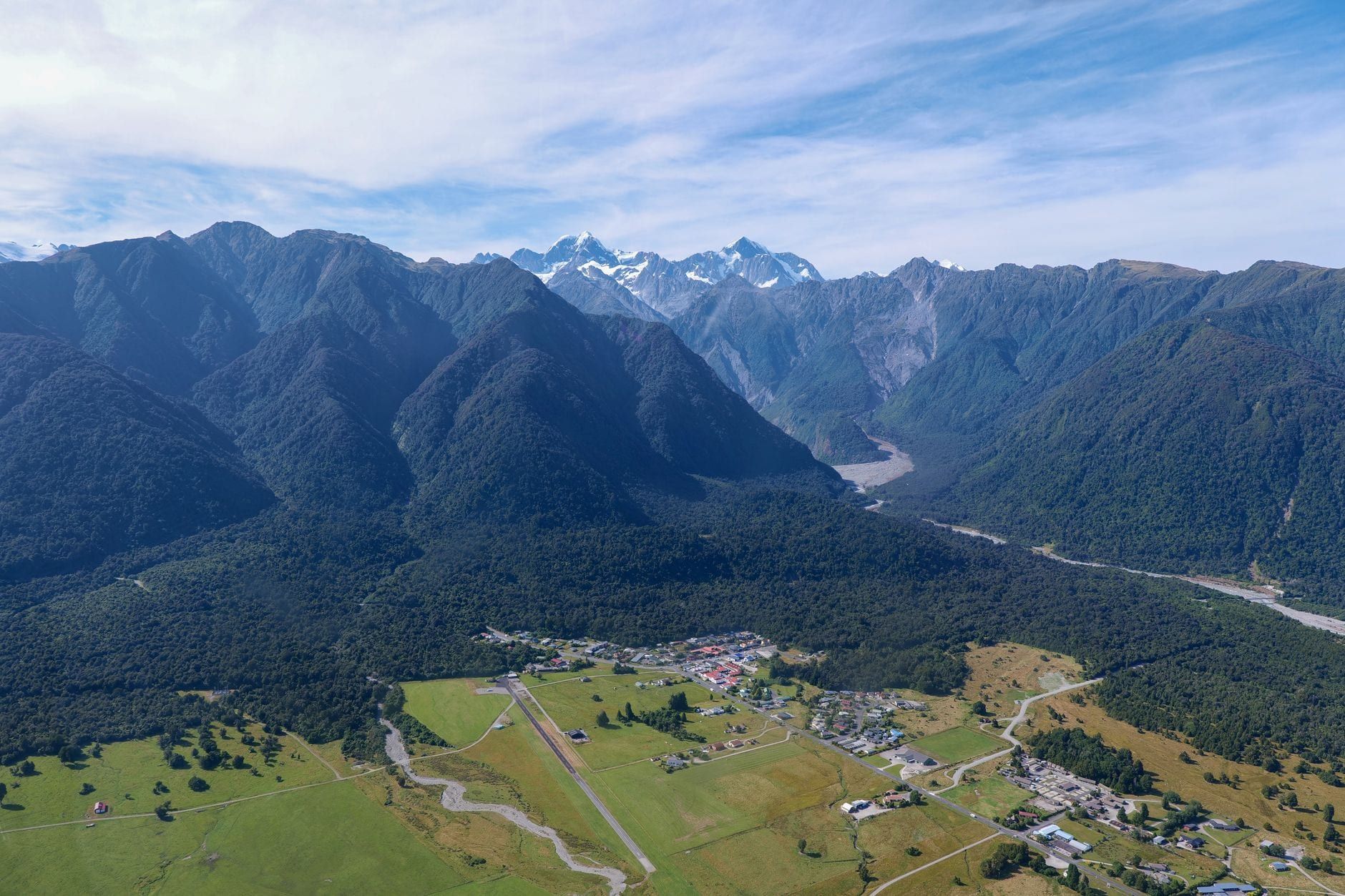
Franz Josef and Fox Glacier sit twenty-five minutes apart on State Highway 6, both tumbling out of the Southern Alps toward the Tasman Sea. Most travelers can't justify two heli-hikes on one trip. The real decision comes down to which town fits how you want to spend your two or three days in glacier country: bigger and busier, or smaller and quieter.
Fox Glacier village, population around 300, edges out its neighbor on scenery and quiet. Franz Josef, with roughly 500 residents and far more restaurants, wins on convenience and rainy-day options. Neither is a wrong choice. This guide breaks down the stats, the prices, and the trade-offs so you can book before your accommodation of choice fills up.
Franz Josef vs Fox Glacier at a Glance
| Franz Josef | Fox Glacier | |
|---|---|---|
| Township population | ~500 | ~300 |
| Peak-season visitors/day | up to ~2,700 | ~1,000 |
| Distance apart | 25-30 min drive (SH6) | 25-30 min drive (SH6) |
| Signature glacier trait | Steeper, more crevasses and ice caves | Longer, gentler descent |
| Signature town trait | Supermarket, 10-15 eateries, hot pools | Lake Matheson, quieter valley |
Pick Franz Josef if you want more restaurants, a supermarket, and a wider spread of rainy-day options within walking distance. Pick Fox Glacier if you'd rather wake up in a quieter village and spend an evening at Lake Matheson instead of a bar strip. Either way, you're never more than half an hour from the other — build in a day at both if your itinerary allows it. Start by checking what each glacier base actually offers before you lock in a booking.
The Glaciers Compared: Size, Steepness & Ice Features
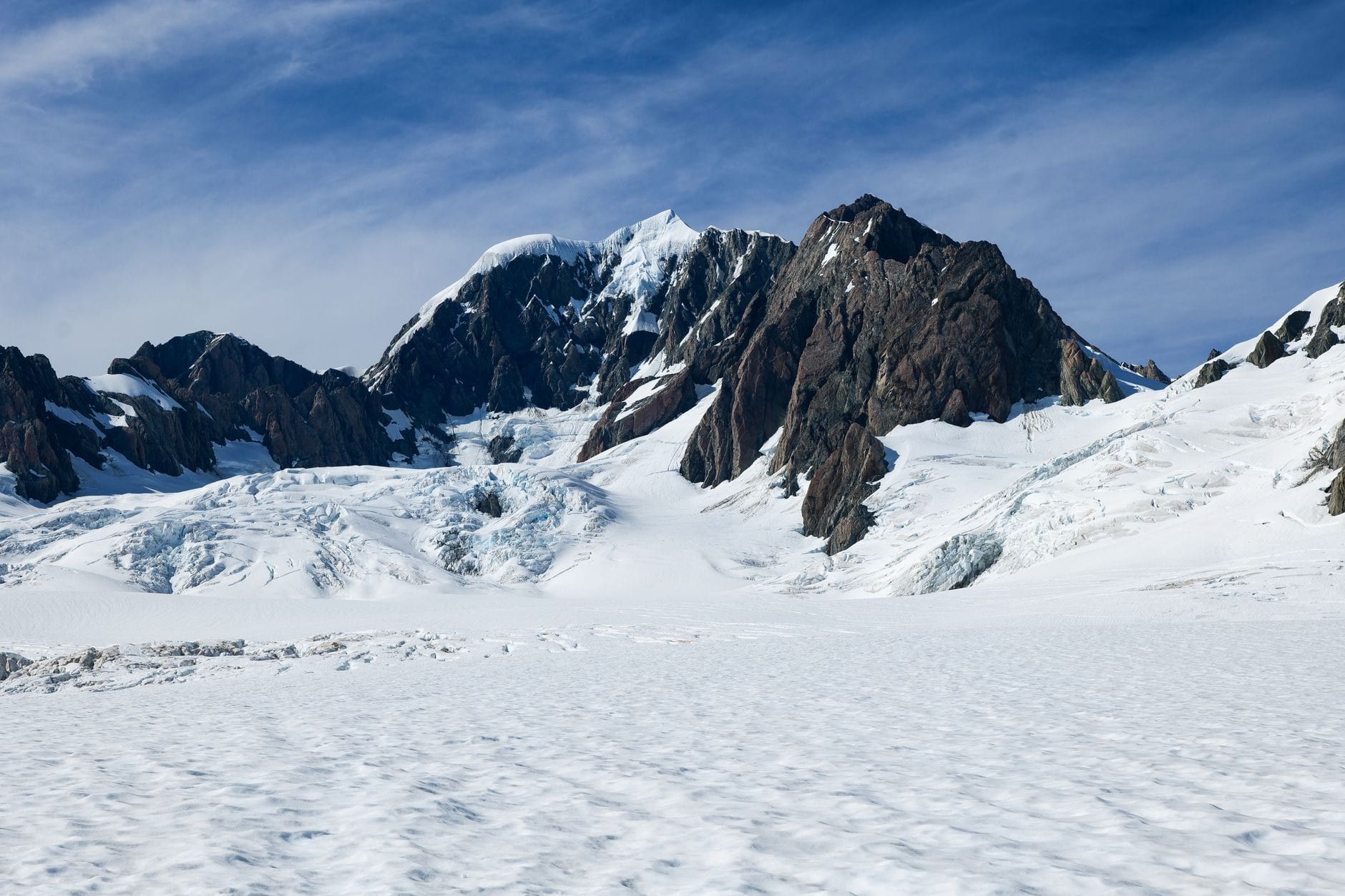
Fox Glacier runs about 11.7 km from its alpine source to the terminal face (older surveys cite up to 13 km), dropping roughly 2,600 metres along the way to a terminus that sits as low as 300 metres above sea level. Franz Josef is shorter, at roughly 10.5-12 km, but falls on a steeper gradient to a terminus around 240 metres above sea level. That steepness is why Franz Josef's ice looks more dramatic close up: more crevasses, more visible blue ice, and pinnacled icefalls where the glacier accelerates over uneven bedrock.
Fox Glacier's gentler slope makes for a longer, broader tongue of ice and a wider valley view. Both glaciers run about 300 metres thick at their accessible sections. Franz Josef's terminus sits about 19 km from the Tasman Sea; Fox Glacier's is closer, around 12 km, which is part of why its lower valley feels more compressed between rainforest and ice.
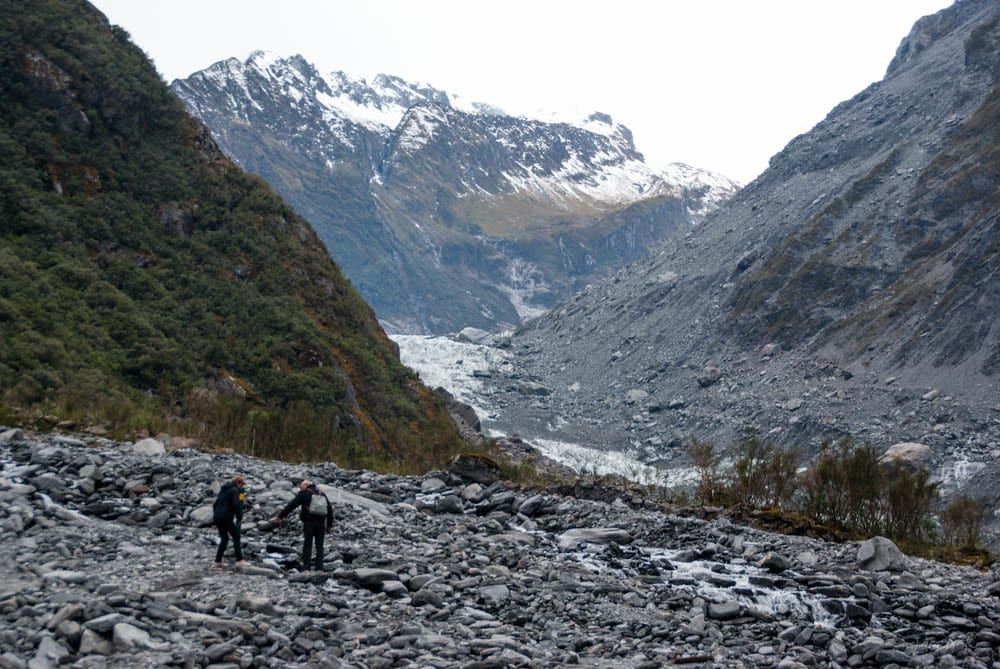
Both glaciers have pulled back sharply since the 1980s. Fox Glacier retreated more than 3 km since the 1880s, staged a brief advance of about 300 metres between 1985 and 2009 — nearly a metre a week at its fastest in 2006 — then began retreating again in 2008 and hasn't stopped. A storm eventually washed out the old valley-floor access track. Any article describing a walk-up glacier visit before 2010 is describing a New Zealand that no longer exists: today, reaching the ice on either glacier means a helicopter, full stop.
Getting Onto the Ice: Heli-Hikes, Prices & Free Viewpoint Walks
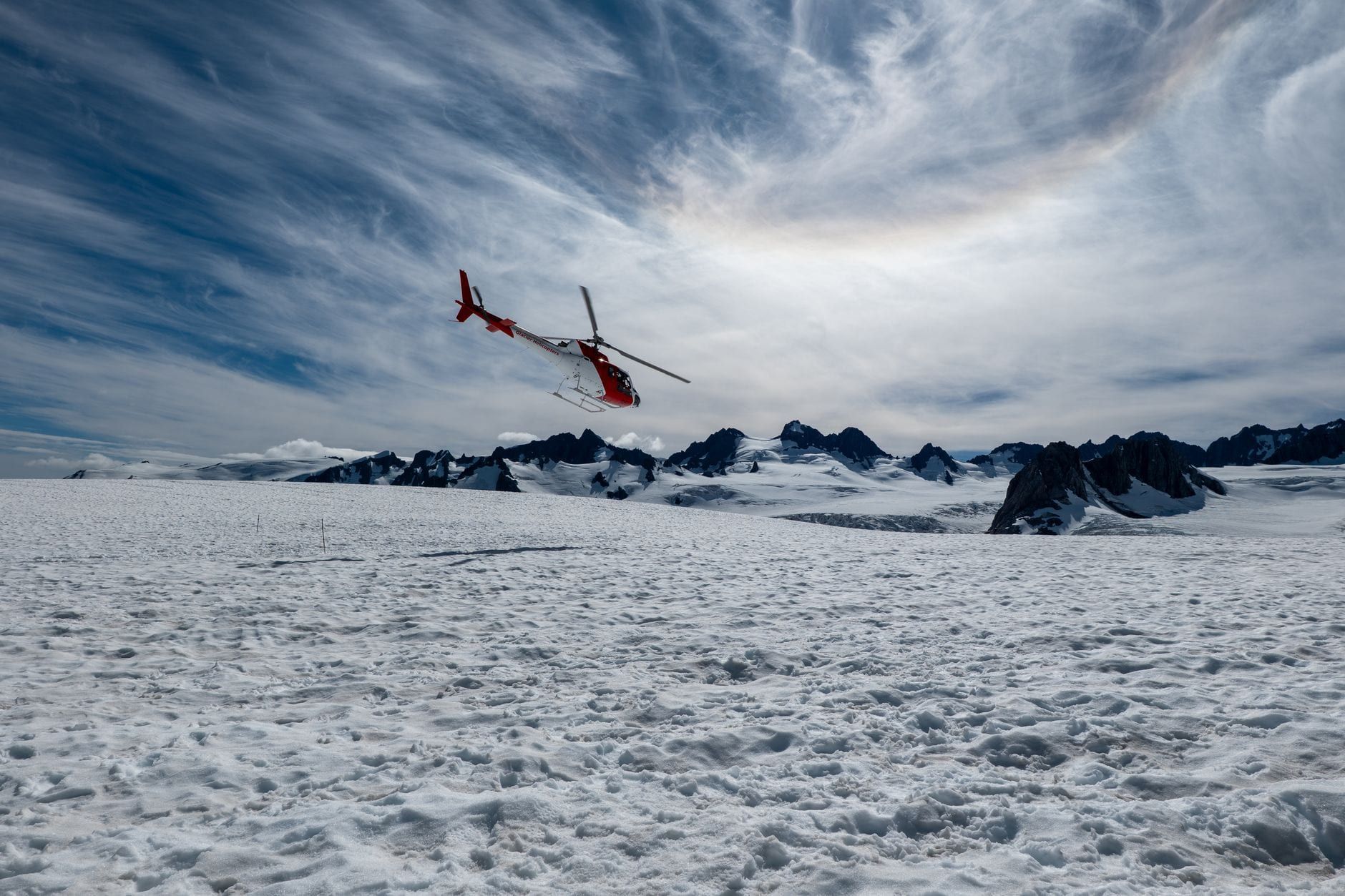
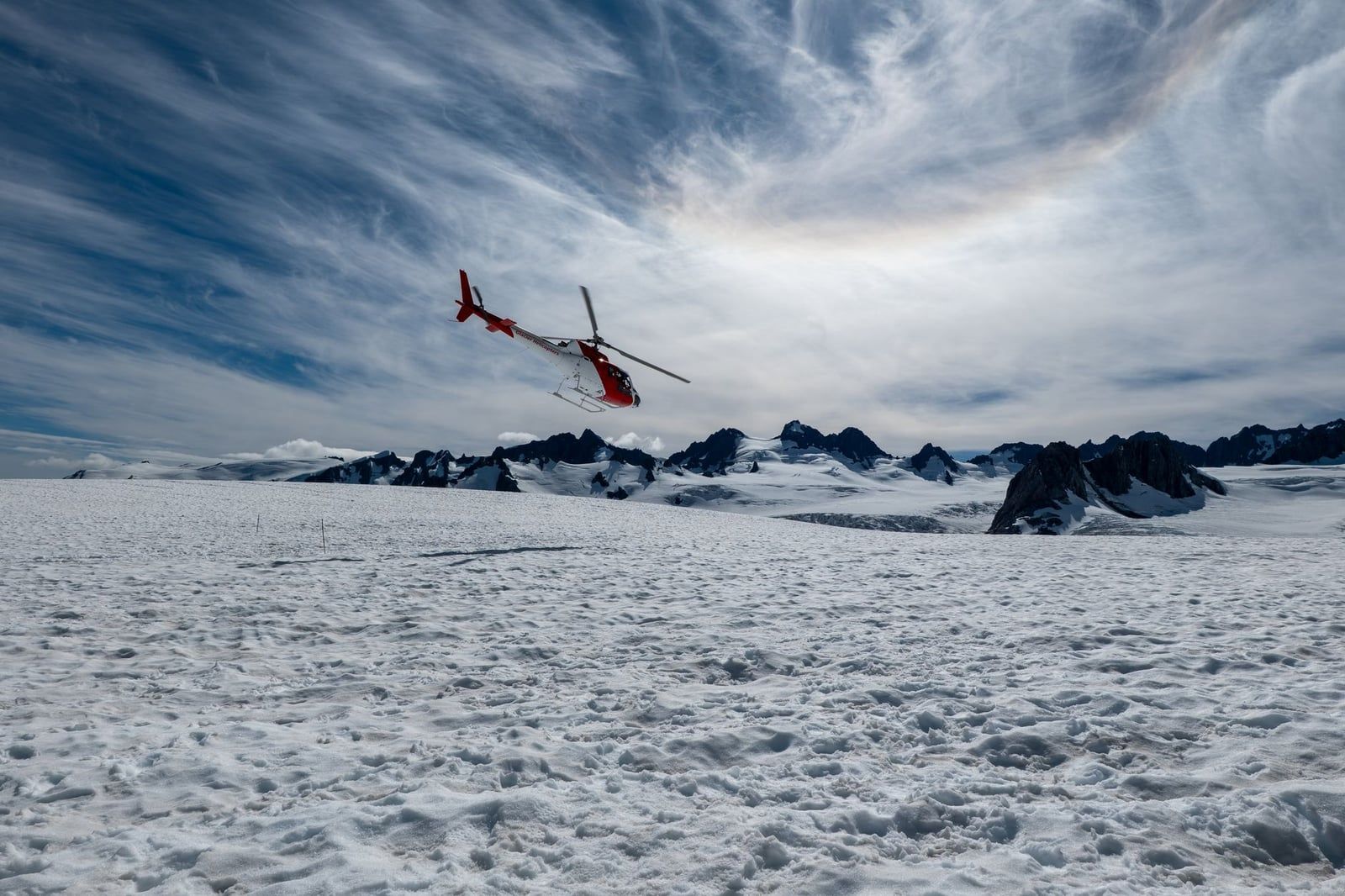
Each glacier has one guiding company running the show: Fox Glacier Guiding on the south side, Franz Josef Glacier Guides twenty-five minutes north. Both fly clients from the valley floor onto stable upper ice, since neither terminus is safe or reachable on foot anymore, and both kit you out with boots, crampons and a jacket before you board.
| Fox Glacier | Franz Josef | |
|---|---|---|
| Standard heli-hike price | ~NZ$795 per adult | ~NZ$899 per adult |
| Ice time | up to 3 hours | about 2.5 hours |
| Total trip length | about 4 hours door-to-door | about 4 hours door-to-door |
| Minimum age | 9 years | 10 years |
| Free valley walk to viewpoint | 6.4 km return, about 2 hours | roughly 30-45 min one way |
Fox Glacier's Flying Fox Heli Hike lands crampon groups near Victoria Falls, where guides cut steps through crevasses and ice caves for close to three hours; ask about the family rate if you're traveling with kids aged 9 to 16. The South Side Walkway is the free alternative if you skip the helicopter — a genuine 6.4 km return through podocarp rainforest to a viewpoint across the valley, not up to the ice itself. The South Side Walk guide maps the route and its lookouts in full.
Scenic flights that circle the upper icefall without landing run about NZ$350-450 and take a fraction of the time — a solid option if the calendar or the budget doesn't stretch to a full heli-hike. They still cover the entire glacier length from the air, including sections no walking track ever reaches. Compare current helicopter tour options and check current pricing and departure times before you book, since packages and fees shift by season.
Comparing the Two Towns: Where to Stay, Eat & Restock
Franz Josef has the numbers: about 500 permanent residents, 10 to 15 restaurants and cafes, and the only supermarket in glacier country. You can restock properly here — bread, produce, a decent wine shelf — rather than relying on a general store's tins and pasta. Accommodation covers the full range too, from backpacker hostels to full-service hotels, which is exactly why it fills up first in the November-to-March peak.
Fox Glacier village is smaller by design: around 300 residents, about five eateries, and a general store for basics. Motels and holiday parks cover most budgets, but the selection is thinner, and rooms disappear fast in January. What Fox Glacier lacks in restaurant variety it makes up for in quiet — walk the main road at 9pm and you'll mostly have it to yourself.
Both townships run Top 10 Holiday Parks with powered campervan sites from around NZ$44-48 a night, and Haast, about ninety minutes south, is a fallback if both fill up. Book six to eight weeks ahead for a summer weekend at either base; peak-season walk-ins often mean a long drive back the way you came to find a bed.
Beyond the Ice: What Else Each Base Has to Offer
Non-glacier options are often what tip the decision, especially with a rain day to fill. Fox Glacier keeps things scenic and low-key. Franz Josef spreads wider, with a proper indoor fallback for wet weather.
Fox Glacier's Quiet Side
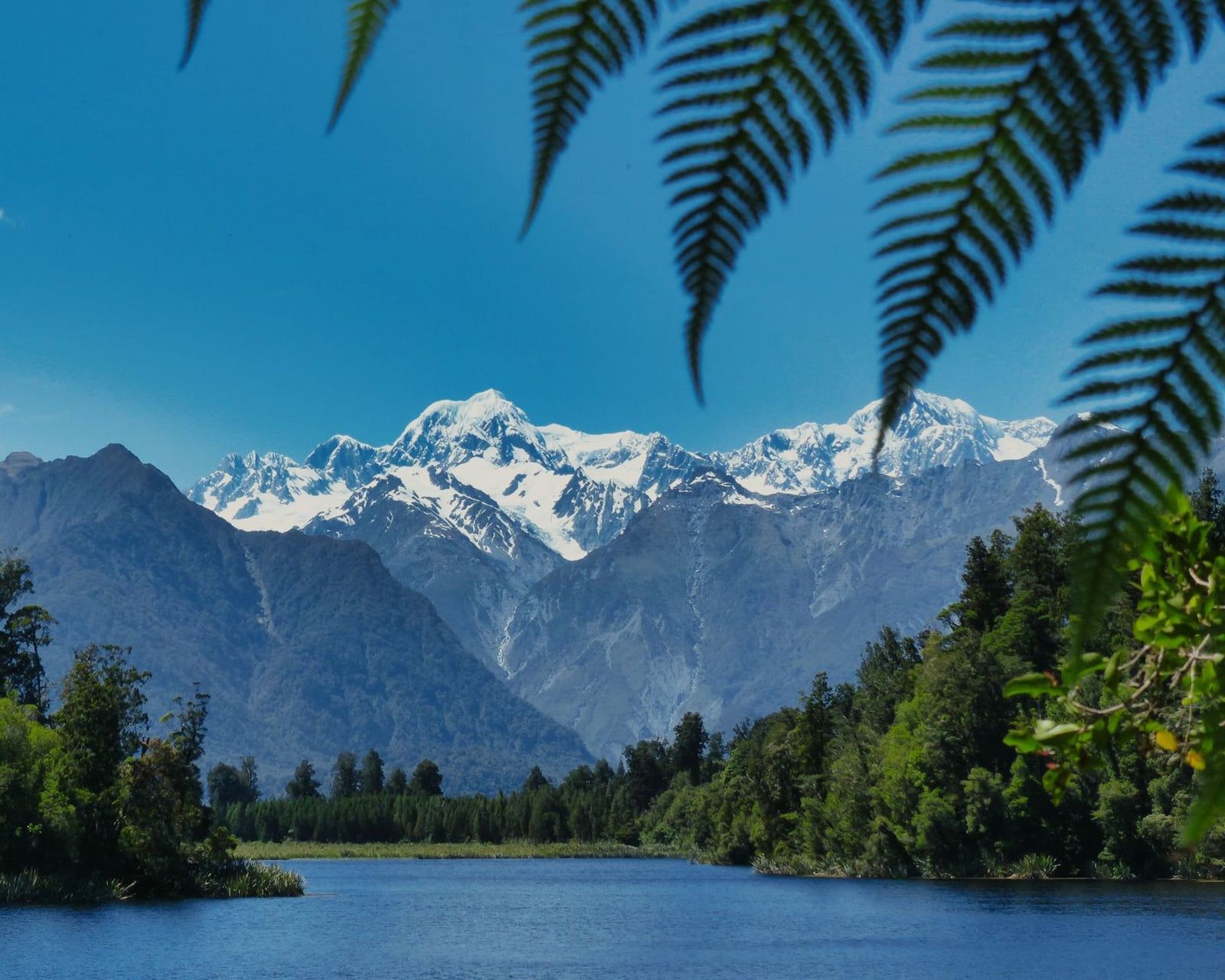
Lake Matheson, six minutes from the village, is the reason half the photos of Aoraki/Mount Cook you've seen exist. The full 4.4 km loop takes about ninety minutes, or stop at Jetty Lookout — a flat, wheelchair-accessible 2.4 km return — for the same dark, tannin-stained water without the whole walk. The mirror reflection only works at dawn or dusk on a windless day; midday wind ripples the surface and kills the shot. Beyond the lake, Gillespies Beach is a wilder alternative: a coastal walk past old gold-mining relics and a seal colony, with none of Lake Matheson's crowds. For the valley's other short walks, the Fox Glacier hikes guide covers the Moraine Walk and the Peak Viewpoint road.
Franz Josef's Wider Menu
Franz Josef Hot Pools sit right in the village, a straightforward soak after a day on the ice or the trail. The West Coast Wildlife Centre keeps live kiwi behind glass, useful if you're not staying up for a wild sighting. Hikers get more range too: Roberts Point Track is a five-hour return with glacier valley views, while Alex Knob is a full eight-hour day with alpine panoramas, and both start right from the village.
Okarito Lagoon, about 25-30 minutes from Franz Josef, is New Zealand's largest unmodified wetland and one of the few reliable mainland spots for a guided kiwi night tour. It isn't walkable from either village, but if you're based in Franz Josef it's a natural half-day add-on that Fox Glacier can't match without a longer drive. Between the hot pools, the wildlife centre, and Okarito, Franz Josef has more to fall back on if the weather closes in on your glacier day. See the full rundown of options in the things-to-do guide.
Weather, Crowds & How Long to Stay
The West Coast sees rain on about 200 days a year, and helicopters won't fly in strong wind, low cloud, fog or heavy rain. Spring (September to November) is the wettest stretch, with the highest odds of a cancelled heli-hike or a flooded track. December through March, running into early autumn, gives the mildest weather and the best odds of a clear flying window.
Plan on at least two nights at whichever base you choose. One day gives you zero backup if your heli-hike gets pushed; two gives the weather a second chance and still leaves room for Lake Matheson or the hot pools. If your flight is scrubbed, ask about rebooking for the next morning before you ask for a refund — most operators will try to slot you in first.
Stay behind the marked barriers near either terminal face. In January 2009, two tourists died at Fox Glacier's terminal face when a hundred-tonne block of ice collapsed after they crossed a safety barrier. The tracks are safe if you stay on them. They're not if you don't.
Franz Josef's higher visitor count shows up most at the car park and the first stretch of track, not on the ice itself — heli groups are small regardless of which base you choose. Arrive at either viewpoint before 9am or after 4pm in January and you'll dodge most of the tour buses. Check driving directions and route conditions before you set out, since access roads can close after heavy rain.
Which Should You Choose? A Decision Guide for Different Travelers
Match your priorities to a base and the choice gets easy fast.
- First-timers and families: Franz Josef — more amenities, an easier fallback if plans change.
- Photographers and nature lovers: Fox Glacier — Lake Matheson's reflections beat any lookout nearby.
- Budget travelers: Fox Glacier — a cheaper heli-hike and fewer temptations to spend on extras.
- Short on time: whichever base sits closer to your route — both deliver a full heli-hike.
- Maximum amenities and nightlife: Franz Josef, easily.
None of this locks you in. The drive between villages takes twenty-five minutes, so basing in one and day-tripping the other costs an hour of driving, tops. Browse all glacier tour options for both towns before deciding where to sleep.
A Two-Night and Four-Night Split
With two nights, base in whichever town has your heli-hike booked, walk the valley track the same day if weather allows, and spend the second day on that town's non-glacier highlight — Lake Matheson for Fox, the hot pools or Wildlife Centre for Franz Josef.
- Nights 1-2, Fox Glacier: heli-hike or valley walk, then Lake Matheson at dawn.
- Day 3: drive to Franz Josef (25 minutes), afternoon at the hot pools.
- Nights 3-4, Franz Josef: Roberts Point or Alex Knob hike, evening Okarito kiwi tour.
Both glaciers reward the same amount of planning: book the heli-hike first, build in a spare day for weather, and treat the town choice as a matter of taste rather than a wrong answer. Franz Josef makes a broader, easier base. Fox Glacier makes a quieter, more scenic one. Pick the one that matches the trip you actually want, then use the other for an afternoon.
Frequently asked questions
Can you visit both Franz Josef and Fox Glacier in one trip?
Yes. The towns are about 25-30 minutes apart by car, so most travelers with a rental car day-trip one from the other or split their stay across both.
Which is bigger, Fox Glacier or Franz Josef Glacier?
Fox Glacier is slightly longer, at about 11.7 km (older figures cite up to 13 km) versus Franz Josef's roughly 10.5-12 km, but Franz Josef is steeper, with more crevasses, ice caves and visible blue ice.
Can you still walk right up onto Franz Josef or Fox Glacier?
No. Terminus retreat and unstable ice near the base mean both glaciers now require a helicopter transfer for any on-ice walking; the free valley tracks only reach a distant viewpoint.
Which town has better food and accommodation, Franz Josef or Fox Glacier?
Franz Josef, with roughly 500 residents, 10-15 restaurants and cafes, and a supermarket, beats Fox Glacier's roughly 300 residents, about 5 eateries, and a general store.
How much does a glacier heli-hike cost?
Roughly NZ$795 at Fox Glacier versus roughly NZ$899 at Franz Josef for a standard heli-hike, though prices vary by operator, season and package.
How many days should I plan for glacier country?
Budget a minimum of two nights at your chosen base. The West Coast gets around 200 rain days a year and helicopter access is weather-dependent and prone to rescheduling.
Which glacier is less crowded, Fox or Franz Josef?
Fox Glacier is quieter, with around 1,000 visitors a day in peak season compared with up to about 2,700 a day at Franz Josef.
Which is the better base if the weather turns bad?
Franz Josef, since it has more rainy-day backup: the Glacier Hot Pools, the Wildlife Centre, and an easy drive to Okarito Lagoon.
Sources
- en.wikipedia.org/wiki/Fox_Glacier
- en.wikipedia.org/wiki/Fox_Glacier_(village)
- en.wikipedia.org/wiki/Te_Wahipounamu
- doc.govt.nz/parks-and-recreation/places-to-go/west-coast/places/westland-tai-pou
- doc.govt.nz/parks-and-recreation/places-to-go/west-coast/places/westland-tai-pou
- doc.govt.nz/parks-and-recreation/places-to-go/west-coast/places/westland-tai-pou