
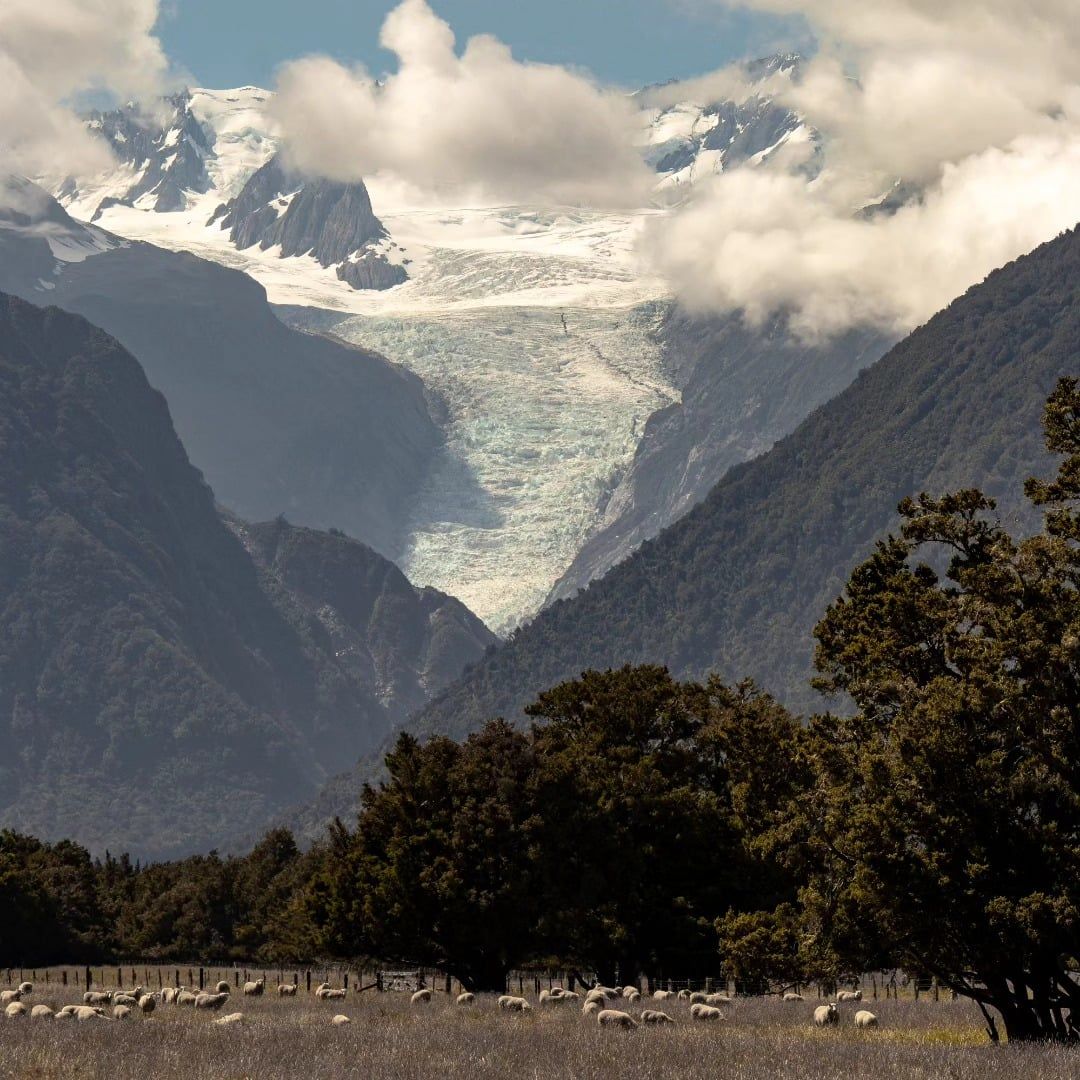
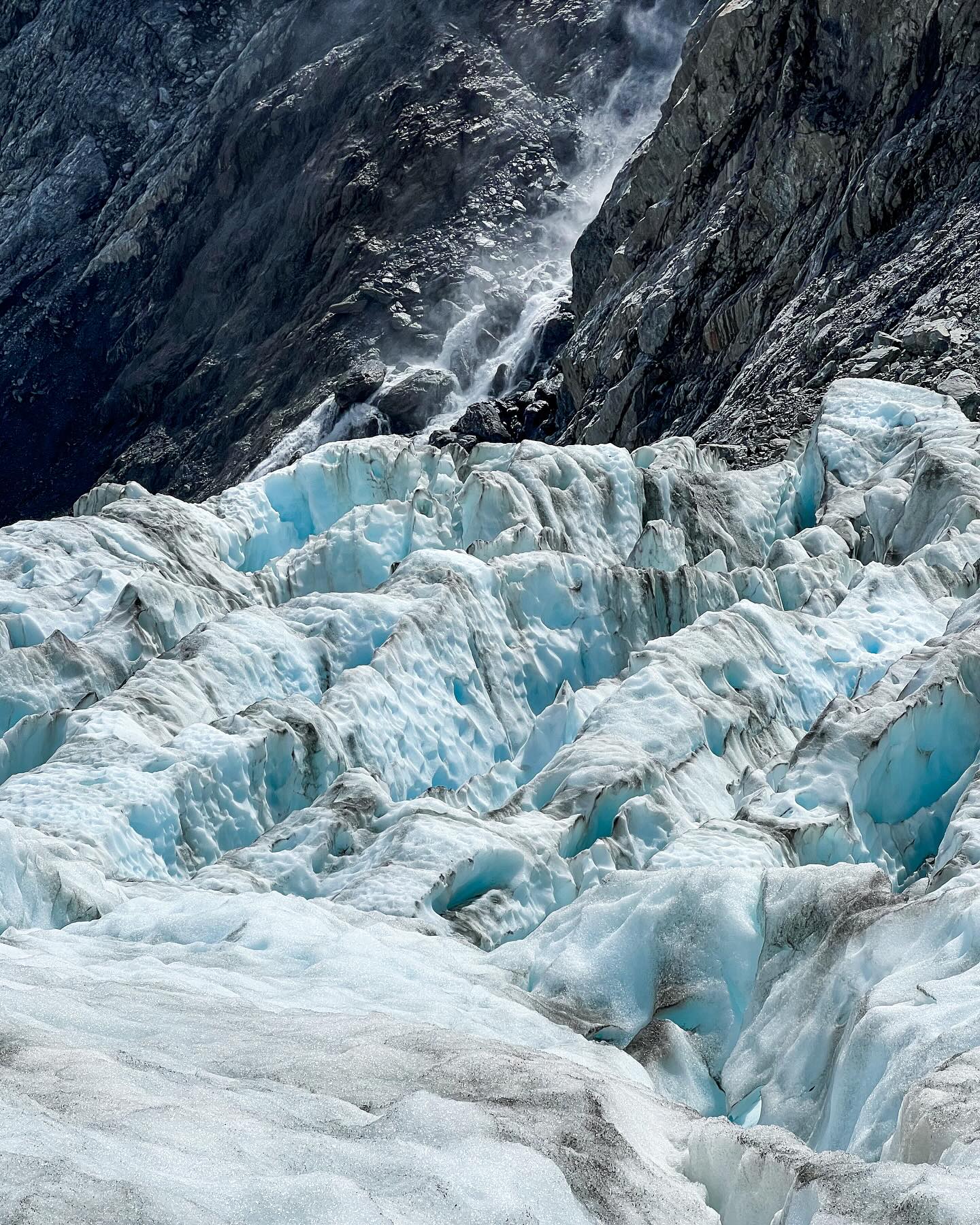
Dropping 2,600 metres from the Southern Alps, this 11.7-kilometre glacier terminates just above sea level in a temperate rainforest. Visitors view the blue-white terminal face from the valley floor or fly up to the pinnacles to walk through ice caves with crampons.
Find Guided ToursFox Glacier drops roughly 2,600 meters from the peaks of the Southern Alps straight into West Coast rainforest. It's a rare combination. This 11.7-kilometer temperate maritime glacier ends just 300 meters above sea level near the local village. Fed by four alpine glaciers, the 110-square-kilometer catchment rests on greywacke and schist bedrock between the Victoria and Fox ranges. At 32 square kilometers, it is New Zealand's third-largest glacier.
Local Māori oral tradition knows the site as Te Moeka o Tuawe. The name translates to the resting place of Tuawe—an ancestor who died in an avalanche. In 1857, Māori guides led Leonard Harper and Edwin Fox to the ice. They were the first Europeans to see it. German geologist Julius von Haast surveyed the valley in 1865, originally naming the lower section the Albert Glacier. A visit from Premier Sir William Fox seven years later prompted a permanent name change. A 1998 settlement officially recognized both histories, renaming the ice Fox Glacier / Te Moeka o Tuawe.
The glacier sits within Te Wāhipounamu, a 2.6-million-hectare UNESCO World Heritage Area inscribed in 1990. It's highly sensitive to climate changes. Between 1985 and 2009, the ice actually advanced 300 meters down the valley. At its peak in 2006, it moved forward roughly a meter a week.
That growth didn't last. Since the 1880s, the glacier has retreated more than three kilometers. The shrinking ice leaves behind steep moraine ridges and feeds heavy meltwater into the Fox River. Further down the valley, an older retreat carved a massive depression that eventually filled with dark, tannin-stained water. This formed the kettle lake now known as Lake Matheson.
Discover the full history and cultural significance on our About page.
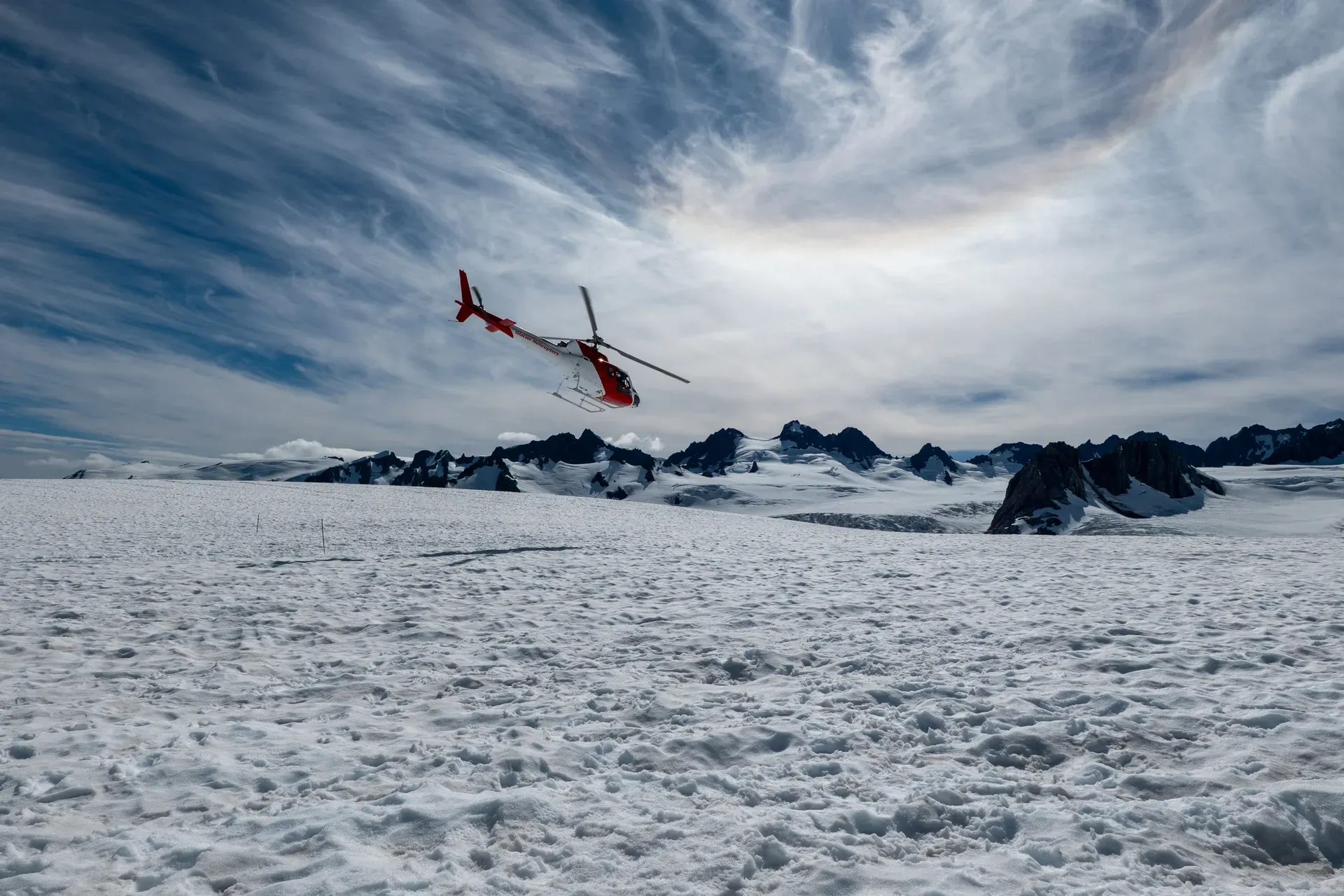
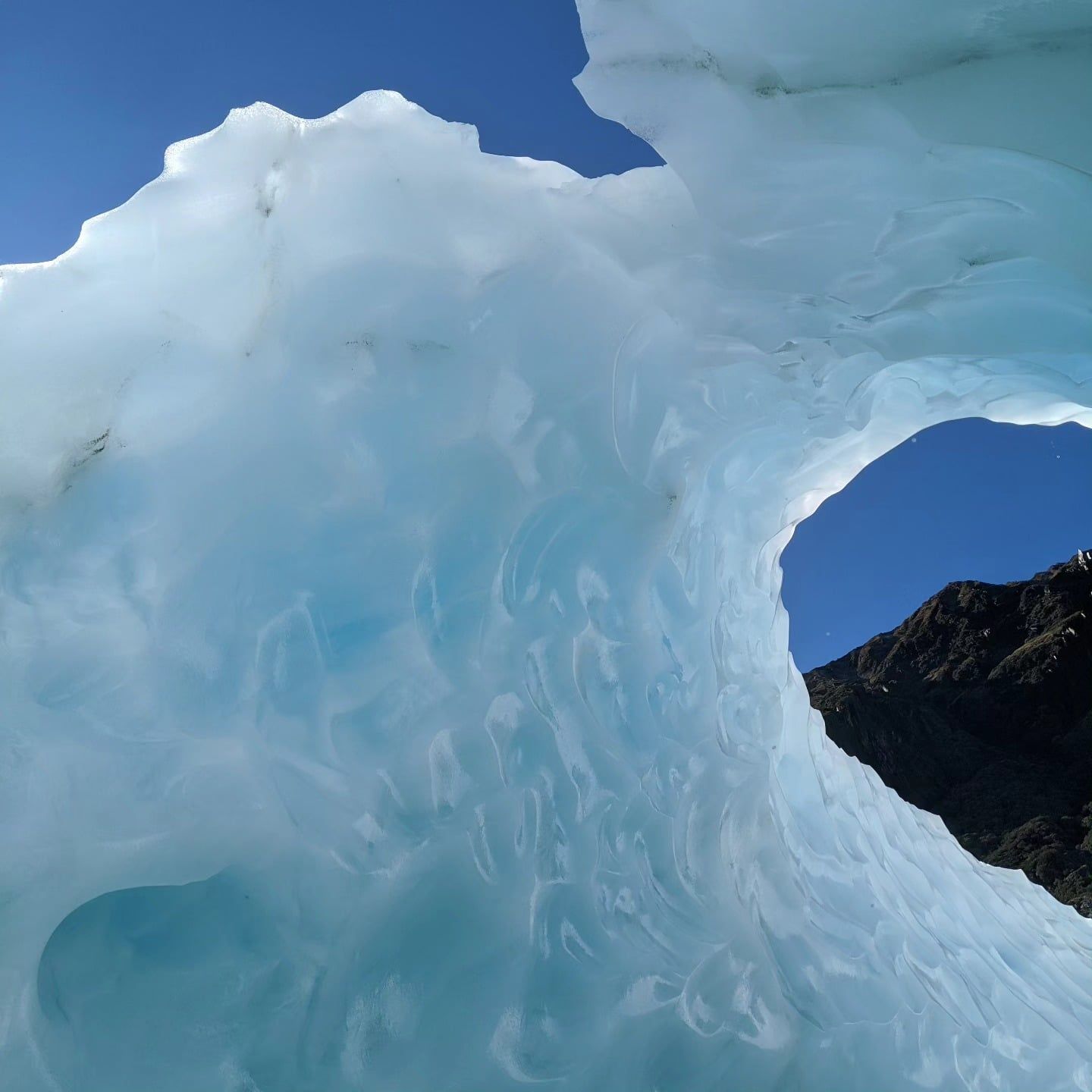
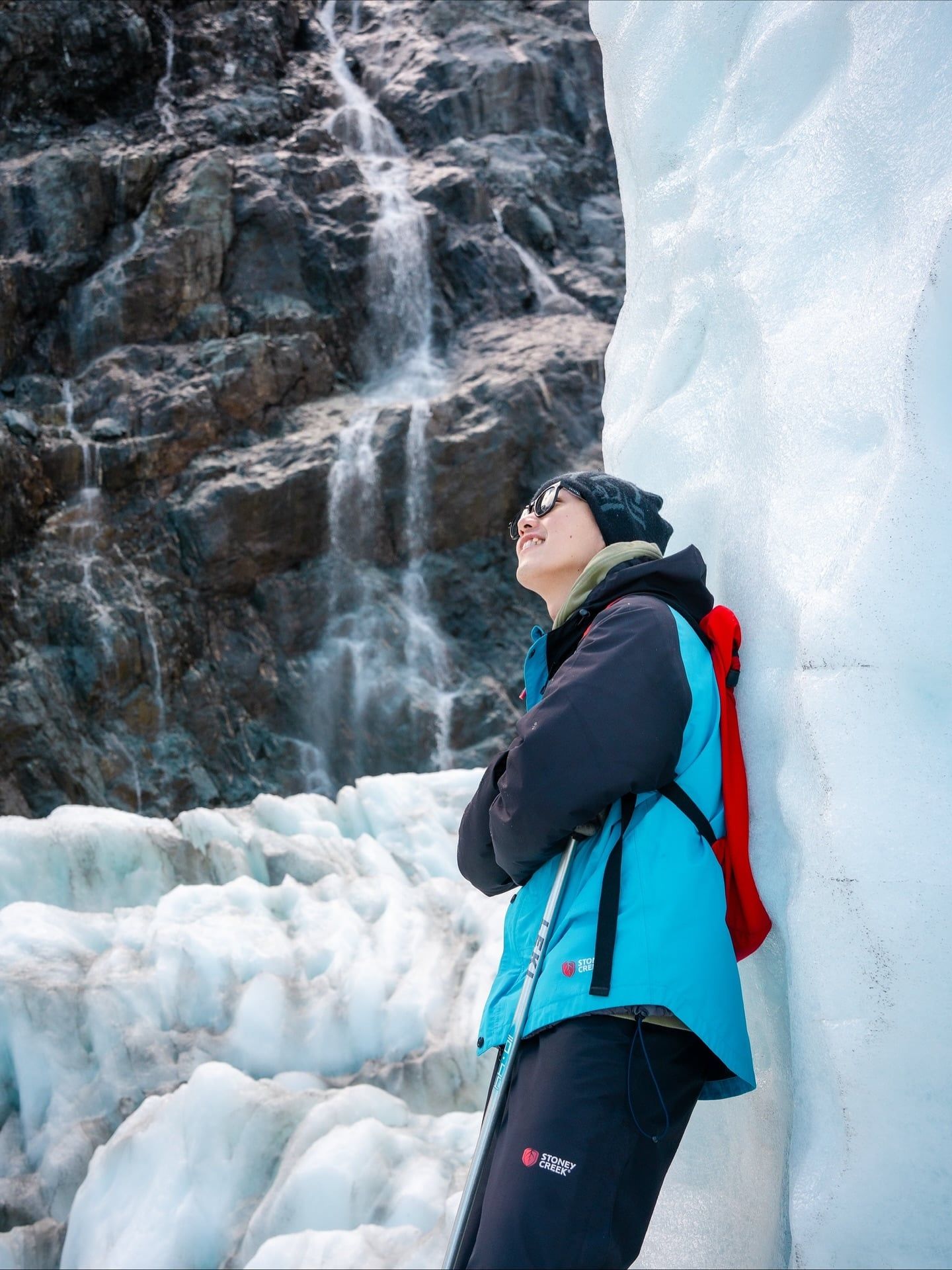
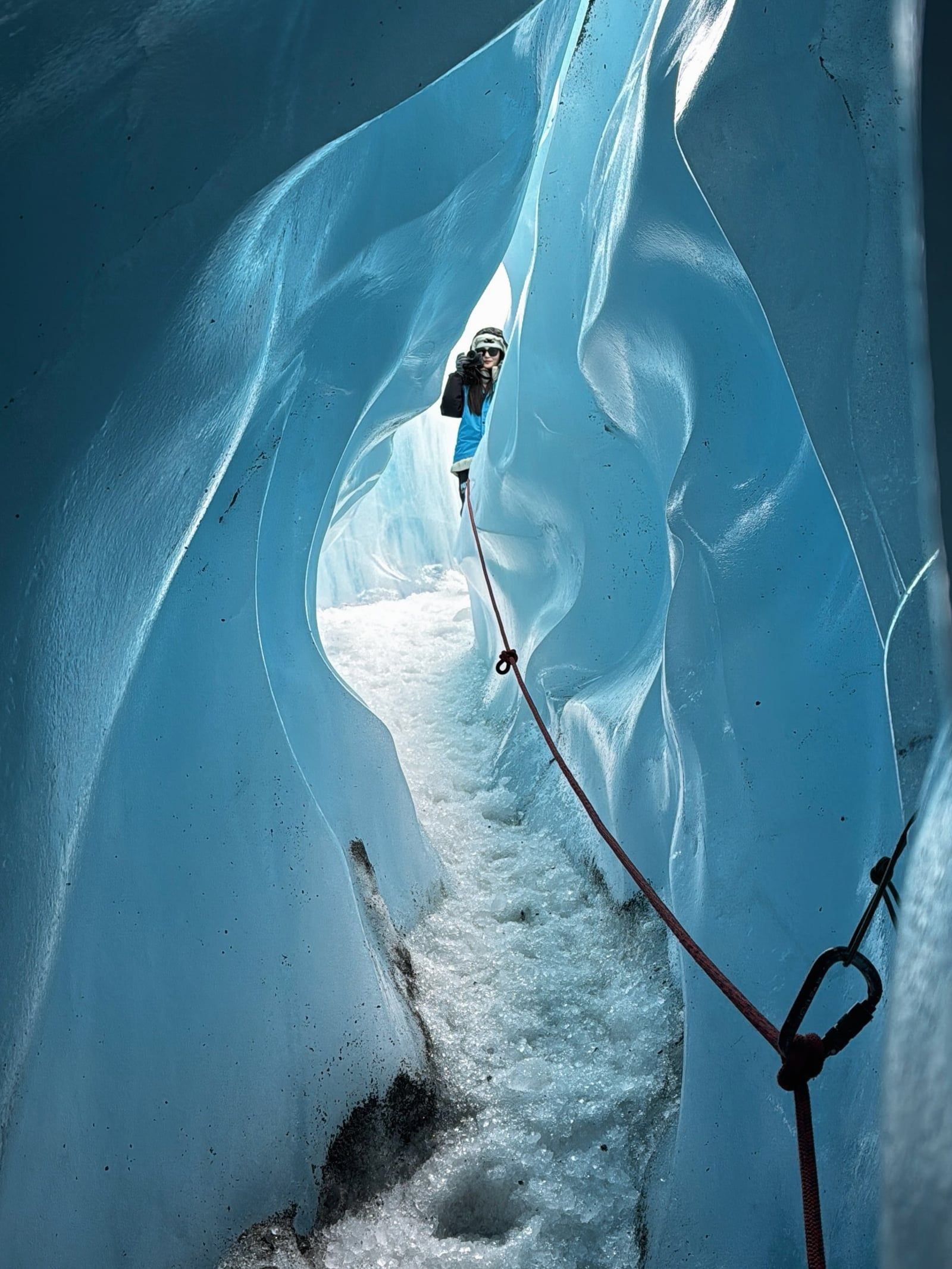
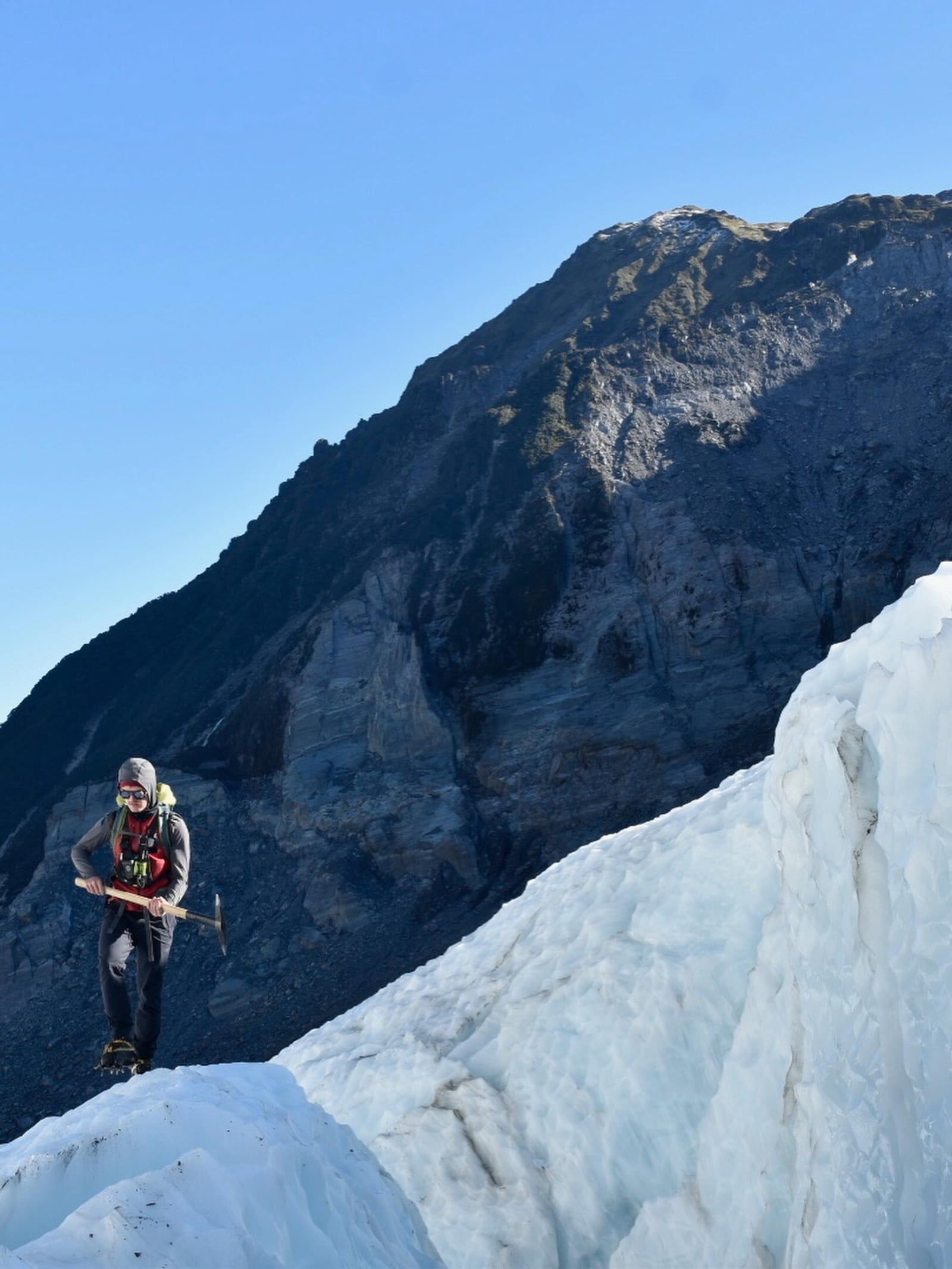
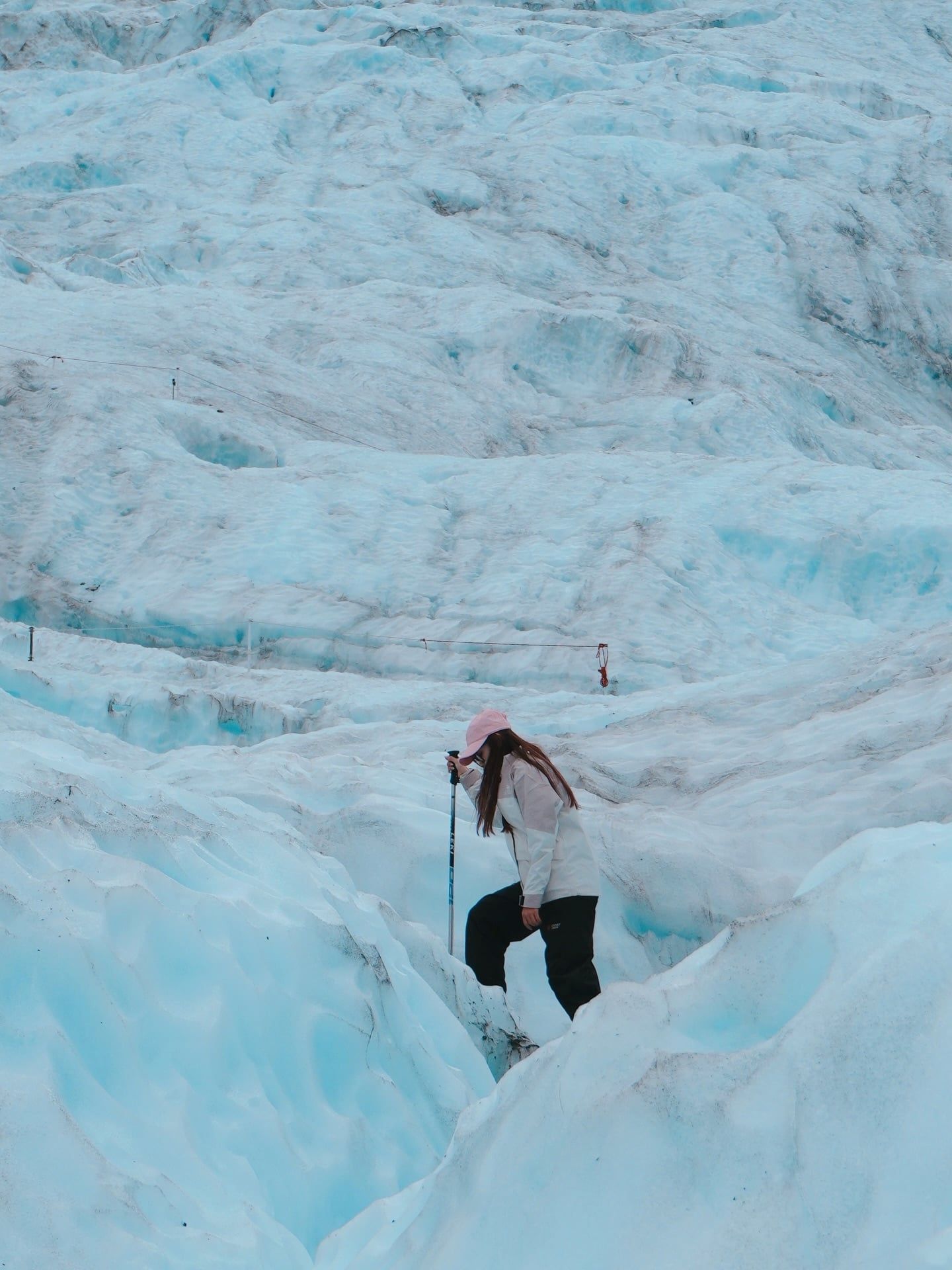
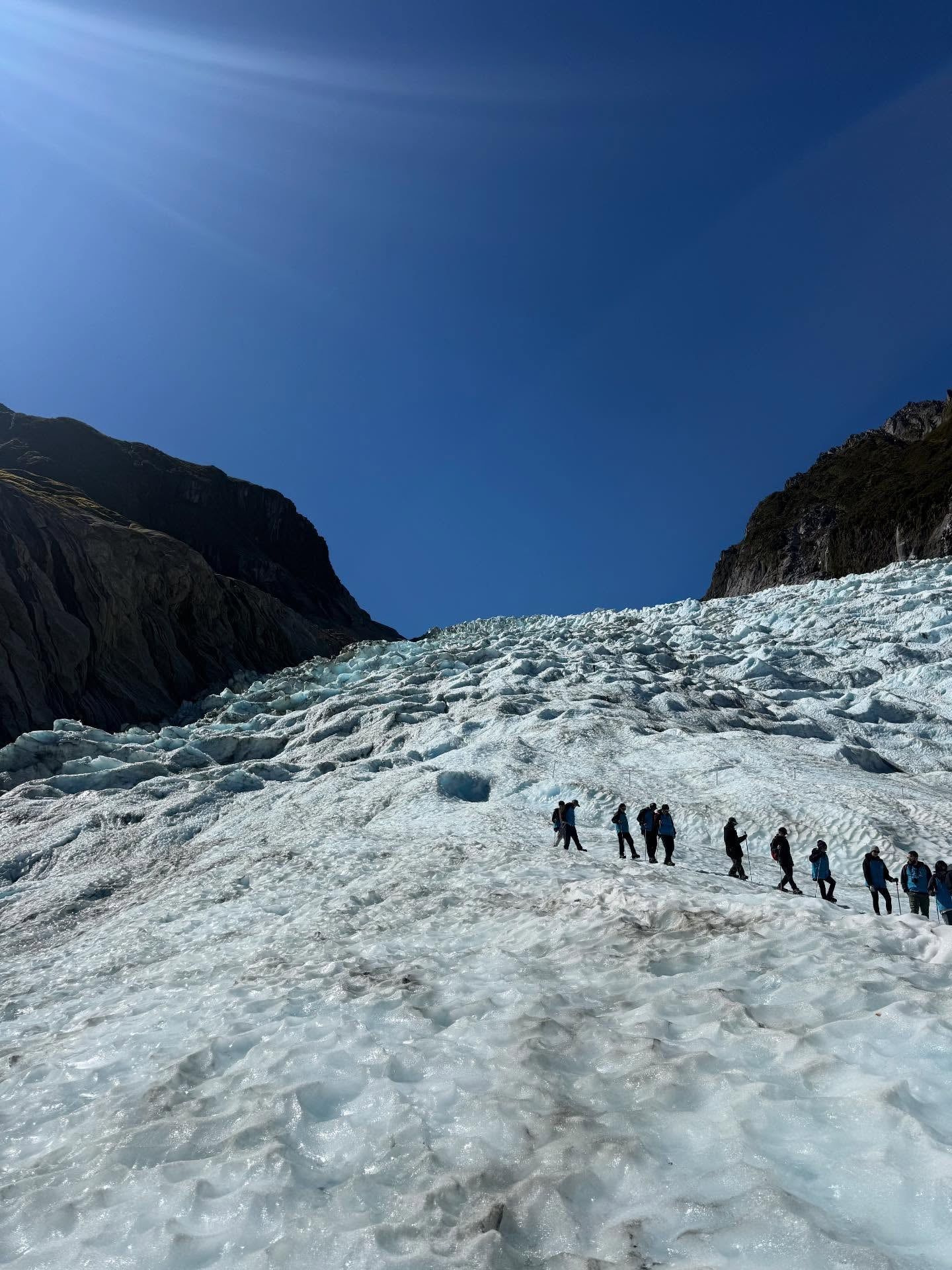
Helicopters bypass the unstable terminal face to land near Victoria Falls. Guides cut steps through the ice, leading you into crevasses and arches wearing provided crampons. You get about three hours on the glacier itself. It costs NZ$795, but this is the only way to touch the ice.
Walk 15 minutes past the Jetty Lookout to the 'View of Views'. On a calm morning, the dark, tannin-stained water perfectly reflects Aoraki/Mount Cook and Mount Tasman. Skip midday when the wind picks up and ruins the effect. You might spot long-finned eels swimming in the shallows.
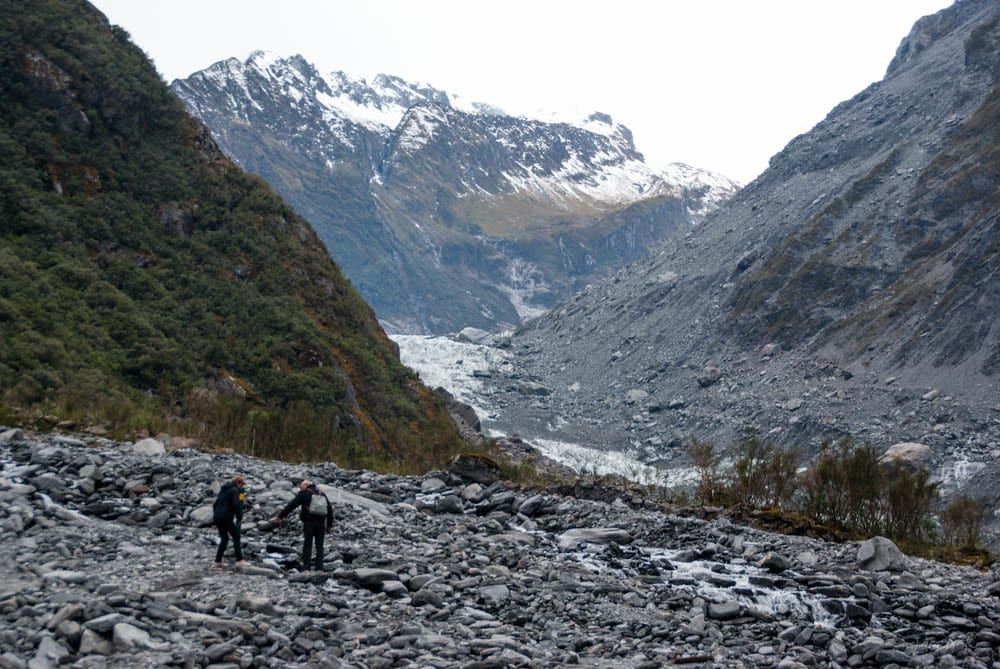
A 40-minute hike through podocarp rainforest and old moraine ends at the main public viewpoint. You look across the valley at the blue-white terminal face, sitting just 300 metres above sea level. The scale is massive. Stay behind the barriers — falling rock and 100-tonne ice collapses are deadly.
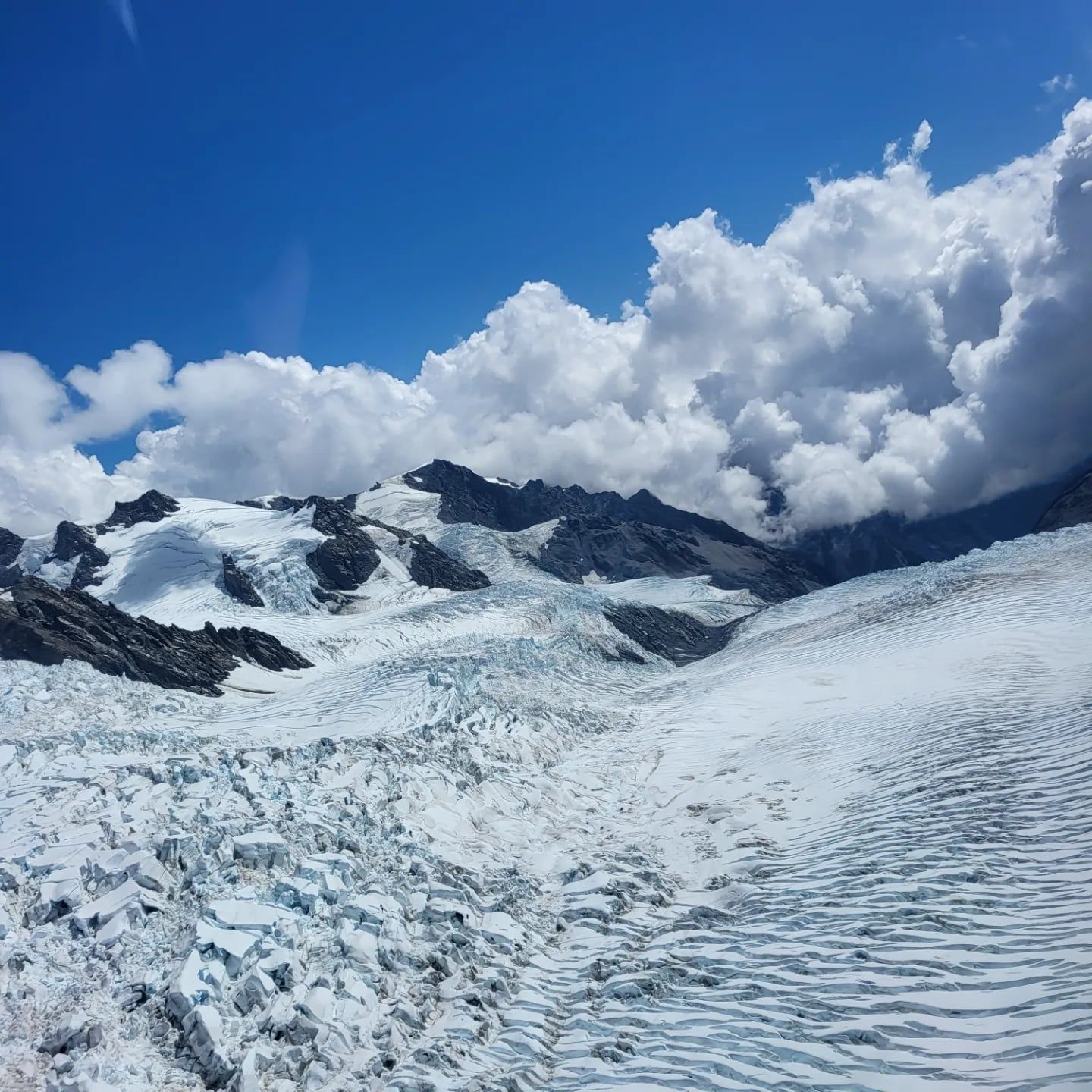
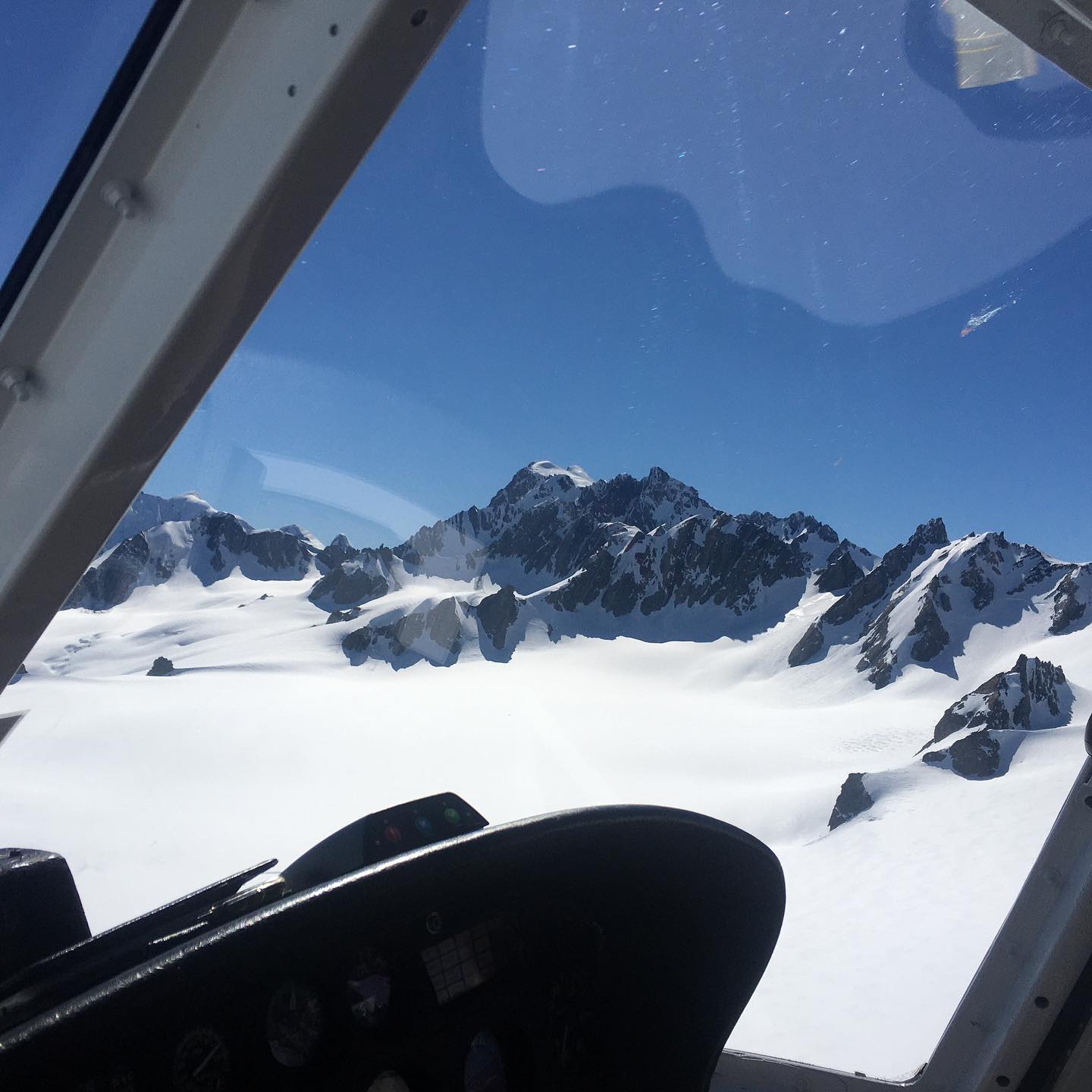
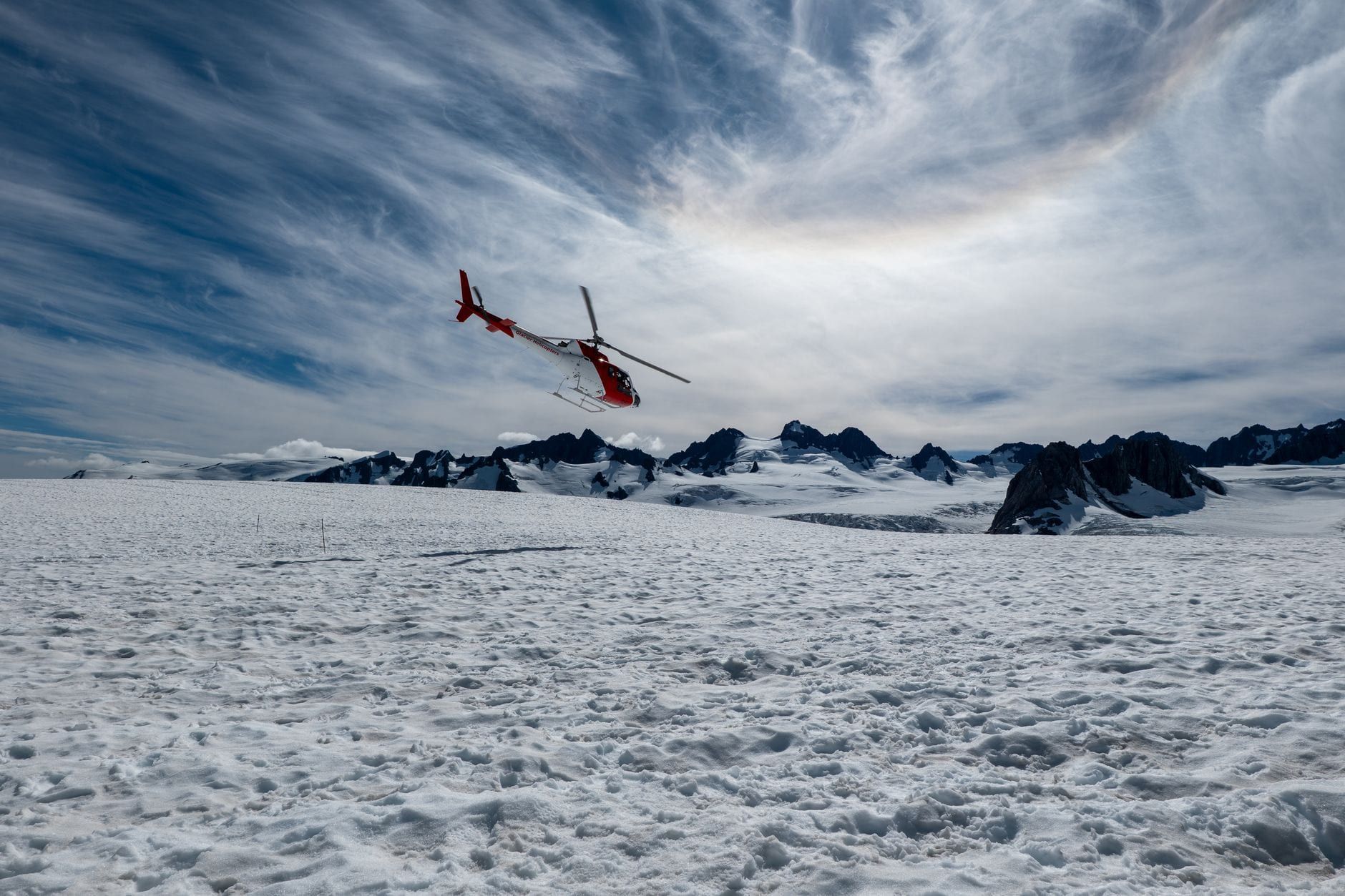
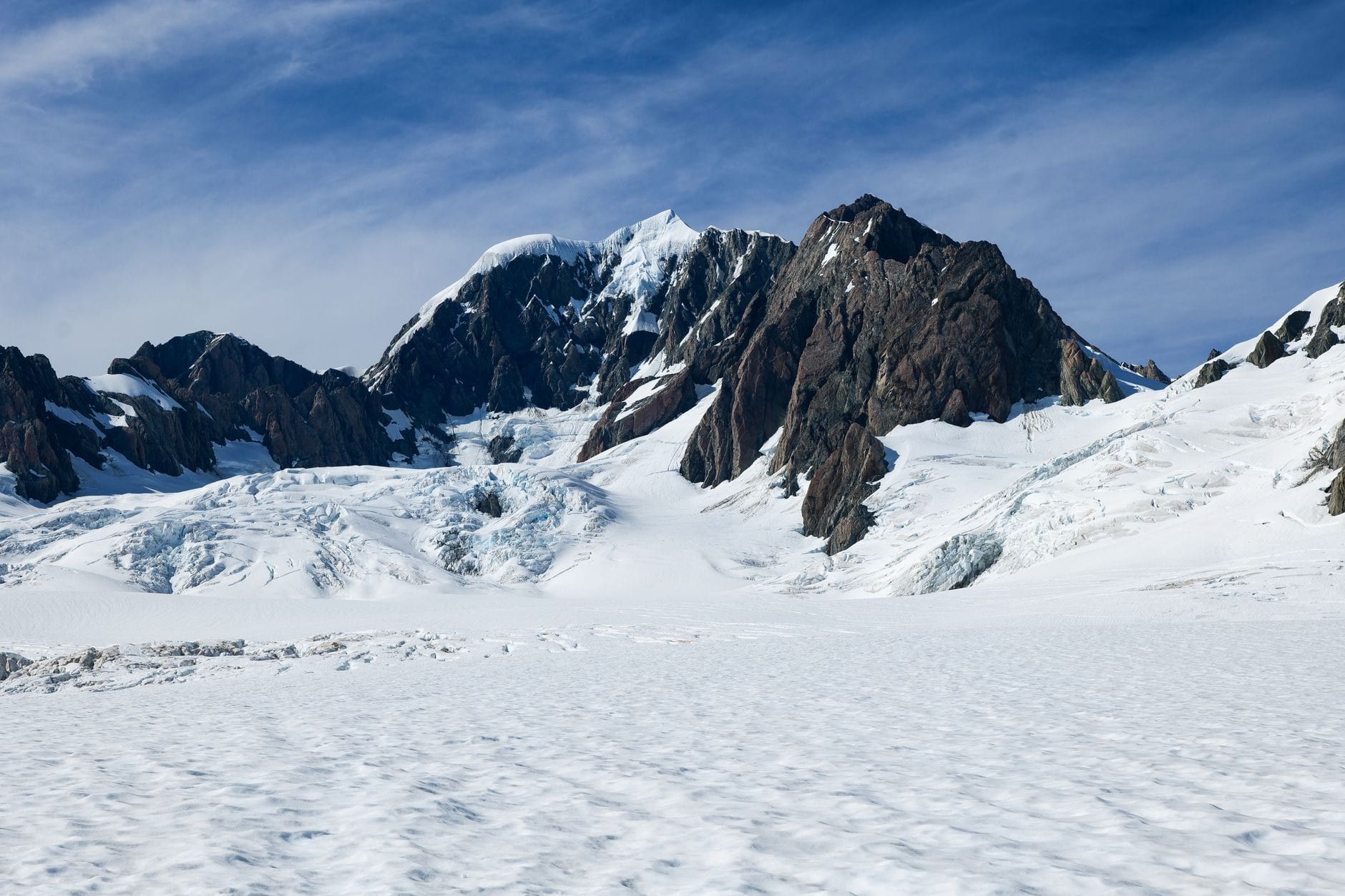
If you want the scale without the physical slog, book a flight over the 11.7-kilometre glacier. Helicopters circle the heavily crevassed upper icefall and the vast high-altitude névé. Flights start around NZ$350. You see the ice dropping 2,600 metres from the Southern Alps down toward the rainforest.
Compare English-guided experiences starting at $65.88, all with free cancellation up to 24 hours before departure.
Swipe to see more
December through March delivers the most reliable conditions for helicopter flights and glacier hikes. You'll get longer daylight and milder temperatures, though rain remains a constant threat on the West Coast.
Spring brings the heaviest rainfall. Expect flooded walking tracks and frequently cancelled helicopter flights. Build extra days into your itinerary if you risk a visit now.
Summer delivers the longest daylight and mildest temperatures. This gives you the highest odds for clear heli-hikes, though you'll share the valley with up to 1,000 daily visitors.
Autumn provides settled weather and fewer crowds. March holds onto the reliable flying conditions of summer, making this a smart window to book a guided ice walk.
Daylight drops to its lowest in winter. You might catch brilliant clear skies, but sudden storms frequently shut down the access roads and valley tracks without warning.
The public tracks and viewpoints around Fox Glacier never close. You can walk the South Side Walkway or the Lake Matheson loop at any time of day. But alpine weather writes the actual schedule. Heavy rain, flooding, or rockfall frequently shut down the access roads and trails with zero warning. If you need to speak with staff, the Westland Tai Poutini National Park Visitor Centre up the road at 69 Cron Street in Franz Josef operates daily from 8:30am to 5pm. They do lock the doors for a lunch break on weekends and public holidays, and stay shut entirely on Christmas Day.
| Category | Price |
|---|---|
| National Park entry & public walking tracks | Free |
| Flying Fox Heli Hike (Adult) | NZ$795 |
| Flying Fox Heli Hike (Child aged 9–16) | NZ$795 |
| Flying Fox Heli Hike (Family: 2 adults, 2 children) | NZ$2,860 |
You don't pay a cent to enter the national park or walk the public trails. You only open your wallet for commercial tours like scenic flights or guided ice walks. Because the valley tracks wash out easily, always check the daily glacier access update on Glaciercountry.co.nz before driving to the trailheads. Heli-hike prices listed are valid until September 30, 2026, and depart at fixed times like 8:50am and 11:50am year-round.
For complete schedules and ticket prices, visit our Hours & Fees page.
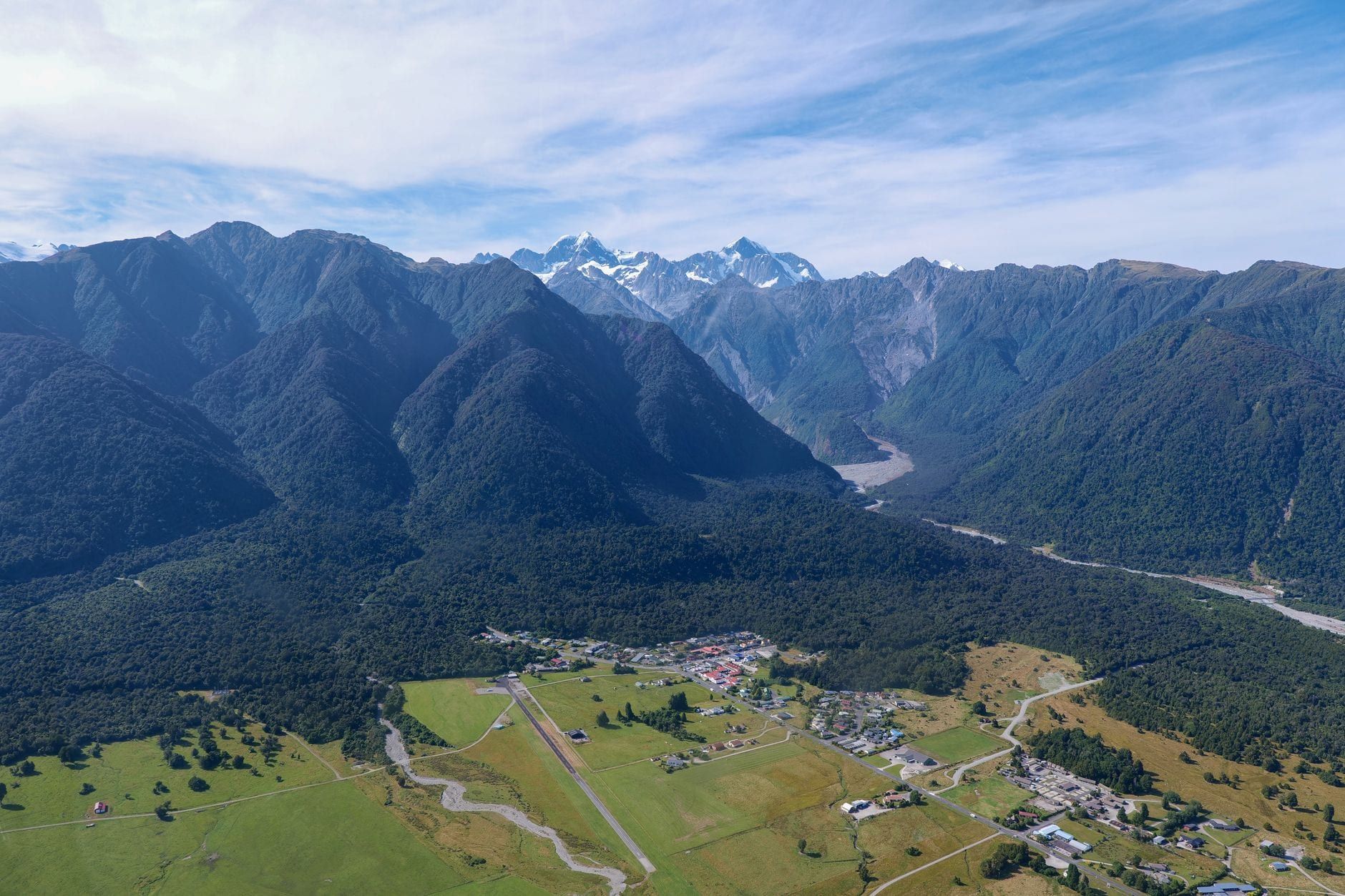
Most visitors drive into Fox Glacier village along State Highway 6, navigating the West Coast from either Christchurch or Queenstown. Since direct bus routes are limited, renting a car offers the most flexibility for reaching the glacier valley.
📍 State Highway 6, Fox Glacier Village, Westland Tai Poutini National Park
Driving from Christchurch covers about 403 kilometres. You'll take State Highway 73 over Arthur's Pass before heading down the West Coast on State Highway 6. This route takes just under five and a half hours without stops. Since no direct bus connects these two points, self-driving remains the most practical way for independent travellers to make the trip.
A scheduled coach service runs from Queenstown to Fox Glacier village once a day. The 370-kilometre journey winds through the Southern Alps and usually involves a transfer or scheduled scenic stops. Expect to spend over seven hours on the road. Booking a seat on InterCity or GreatSights handles the driving so you can watch the alpine terrain pass by.
Fox Glacier village sits directly on State Highway 6. It takes 25 to 30 minutes to cover the 25 kilometres south from Franz Josef. If you start further north in Hokitika, the drive runs 171 kilometres past Lake Ianthe and takes roughly two hours. Fill your tank before leaving either town, as petrol stations are sparse along this stretch.
Without a direct bus from Christchurch, you have to piece together a full-day transit on the InterCity network. The 403-kilometre trip requires connecting through either Greymouth or Franz Josef. You'll spend nearly nine hours traveling. It works if you prefer not to drive, but it consumes an entire day of your itinerary.
For detailed transport options and routes, visit our Directions page.
Weather changes fast in the Southern Alps. Book your heli-hike or scenic flight for your first full day in town. If storms or high winds ground the helicopters, you'll have buffer days to reschedule. Always check Glaciercountry.co.nz for daily track access before driving to the valley.
Midday winds usually ruffle the water, destroying the famous mirror reflection of Aoraki/Mount Cook. Go at dawn or dusk on a clear, calm day for the best shot. The 'View of Views' lookout sits 15 minutes past the Jetty Lookout. Bring strong insect repellent to fend off fierce sandflies.
Fuel up in Fox Glacier or Franz Josef before hitting the highway. There are no petrol stations on the 25-kilometre stretch between the two villages. You won't find any stops between Franz Josef and Hokitika either, and local station hours are often limited.
The terminal face is genuinely hazardous. Falling ice and rockfall are constant threats, and a 100-tonne ice collapse killed two tourists here in 2009. Glacial rivers can also surge without warning if an upstream ice dam bursts. Read the warning signs and never approach the ice directly.
Flying a drone anywhere in Westland Tai Poutini National Park requires a specific permit from the Department of Conservation. This applies to all Fox Glacier tracks and viewpoints. Unauthorised flights can result in confiscated equipment and fines reaching $5,000. Stick to standard photography on the public trails.
Temperatures on the ice can swing between 0°C and 25°C in a single day. Wear layered, waterproof clothing and sturdy boots. Heli-hike operators will turn you away if you wear jeans. Fill your water bottles in town, as the public tracks lack drinking-water taps.
Walk the 4.4-kilometre forest loop to see Aoraki/Mount Cook reflected in the dark, tannin-stained water. Go at dawn on a calm day. Midday winds usually ruin the mirror effect.
New Zealand's other accessible West Coast glacier sits just up the highway. Walk the valley track or book a heli-hike. The local wildlife centre also houses live kiwi.
This multi-day tramping track heads deep into the backcountry. Hikers spend the night at Welcome Flat Hut. There, you soak in natural hot pools right beneath Aoraki/Mount Cook.
Read what travelers share about their experience visiting Fox Glacier — from practical tips to personal highlights.
Planning advice, comparisons, and practical tips.
The Fox Glacier South Side Walkway is the track that gets you closest to Fox Glacier on foot these days — a 6.4 km return route through podocarp…
Fox Glacier village is a scattering of guesthouses and diners on New Zealand's West Coast, home to about 300 permanent residents. It's the base for…
Franz Josef and Fox Glacier sit twenty-five minutes apart on State Highway 6, both tumbling out of the Southern Alps toward the Tasman Sea. Most…
Fox Glacier has walking tracks for every fitness level, from a 20-minute loop to an 8-hour alpine slog, but only two real ways to see the glacier…
No. A major storm washed out the old access track, so the public paths now end at viewpoints hundreds of metres from the terminal face. You'll need to book a guided heli-hike to actually set foot on the ice.
Fox Glacier Guiding charges NZ$795 per adult and child aged 9 to 16, with a family deal of NZ$2,860. These rates are valid until 30 September 2026. The trip takes about four hours door-to-door, including up to three hours on the ice.
No, entry to Westland Tai Poutini National Park and its public walking tracks is completely free. You only pay if you book a commercial activity like a scenic helicopter flight, which starts around NZ$350.
Fox Glacier village sits 25 km south of Franz Josef along State Highway 6. The drive takes about 25 to 30 minutes. Fill your fuel tank before leaving, as there are no petrol stations between the two towns.
December to March offers the mildest weather and the most reliable conditions for helicopter flights. Avoid spring if your schedule is tight. September through November brings the heaviest rain to the West Coast, increasing the risk of track and flight cancellations.
Pack layered warm and waterproof clothing along with sturdy footwear, as temperatures on the ice can fluctuate between 0 and 25°C in a single day. Heli-hike operators require passengers to wear their provided leather boots and crampons, and they prohibit jeans. Bring strong insect repellent for the sandflies.
The Fox Glacier South Side Walkway is not accessible due to uneven terrain, creek crossings, and an elevation change of 100 metres. The nearby Lake Matheson Walk is a better option. Its first 2.4 km is a flat, wheelchair-accessible gravel path leading to the Jetty Lookout.
No. Drone use is strictly prohibited everywhere in Westland Tai Poutini National Park without a Department of Conservation permit. Commercial operators warn that flying an unauthorized drone can result in confiscation and fines up to $5,000.
Browse verified tours with free cancellation and instant confirmation.
Find Tours


